4 Things I Misunderstood About The Bible for 20 Years
How have we read the same Bible but only to come up with totally different perspectives that are in direct contradiction with each other? Which made me ask – What if I'm the one who is wrong?
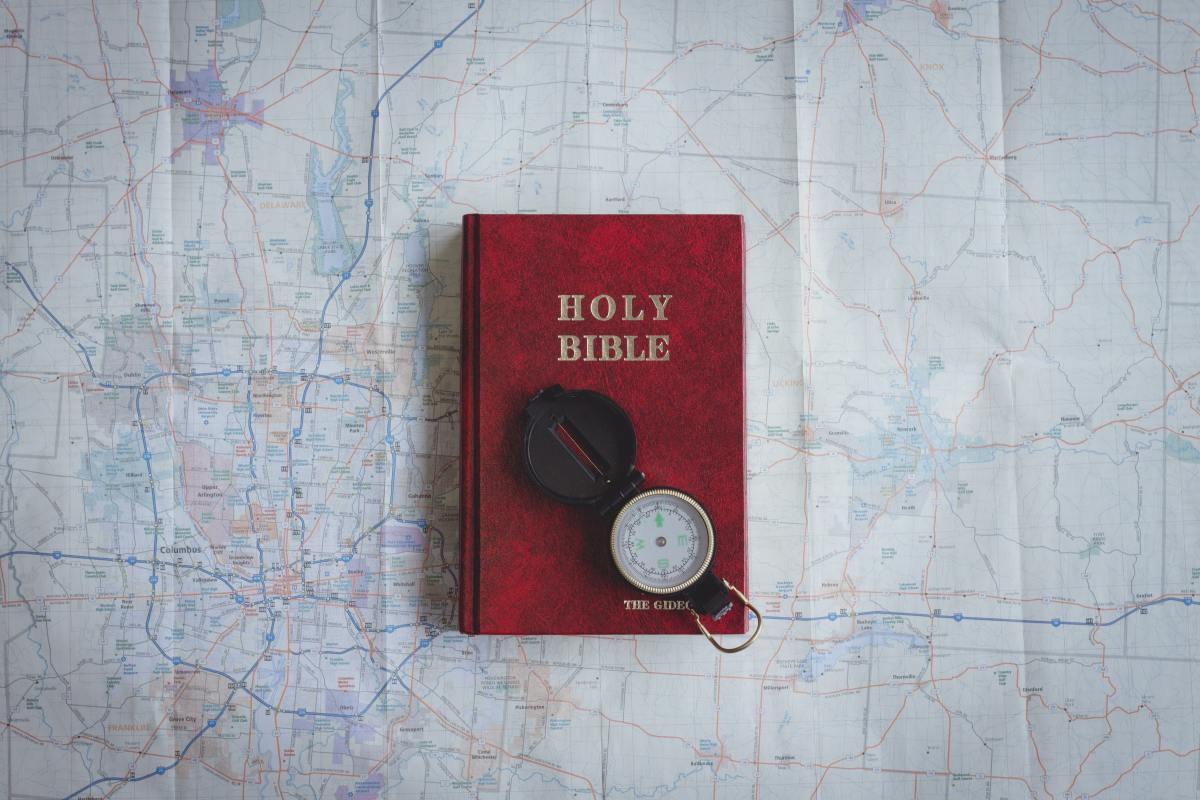
I grew up in a Christian community oozing with knowledge of the Scriptures. As a child, I attended all my Sunday school classes in a CSI (Church of South India – Anglican) church, spent over 10 years including all my teenage years in a pentecostal denomination and then I went to a “non-denominational” church for the last few years. In the last 3 years, I’ve really questioned why I believe what I believe.
I’ve come to question how some of us have read the same Bible but only to come up with totally different perspectives that are in direct contradiction with each other. Which made me ask – What if I’m the one who is wrong?
As I looked deeper, I realised the biases that I’ve grown up with:
- If it’s not in the Bible, it can’t be true. It must be a heresy.
- God hates tradition.
- The Bible always existed.
- There are only 66 books in the Bible.
Before I go further, a disclaimer!
The Bible is my source of hearing and receiving God. I believe with absolute certainty that the Bible is an amazing gift from God to teach us the salvation history. I believe that the Scriptures are the living Word of God. We can absolutely encounter and receive Jesus through the Scriptures.
I completely respect the elders from whom I have learned the scriptures from as I grew up; And I wouldn’t be who I am without them. Having established that; I have come to question ideas and/or doctrines that were handed down to me in a more objective manner. I have listed four ideas that have made me question things that I have taken for granted as part of my subjective upbringing. Below are ideas that made me question more and more of what I’ve taken for granted.
1. If it’s not in the Bible, it can’t be true. It must be a heresy.
“Where’s that in the Bible?” Because everything is in the Bible.
What if this is the wrong question to ask? How do we know that the Bible has the answers to everything? Hear me out…
There are a lot of things not mentioned in the Bible. Let’s start with something (most) Christians universally accept: the doctrine of the Holy Trinity. As someone who believed that the Bible had the answers to everything, I was shocked to find out that the Bible never clearly spoke about the Trinity!
Yet, most Christians believe in the Trinity. Because we trust the authority of the people in the 3rd century who debated, discussed and inspired by the Holy Spirit came to better understand our God.
Similarly, the Bible does not directly speak on other topics like abortion, contraception, drugs, death penalty, IVF and other moral issues. Simply because they were not the main issues during the time the books of the Bible were written. If we solely depend on what the Bible directly teaches about everything, what about the issues the scriptures do not speak about?
Surely, the Bible must have a clear answer to why it is the only source of authority? I firmly believed that there must be! To my surprise, there was no Bible verse claiming this nor did any of the early Christians believe that the scriptures were the only source of authority.
Hold on, doesn’t 2 Timothy 3:16 say that it is? This was my favourite verse for justifying scripture alone.
All Scripture is God-breathed and is useful for teaching, rebuking, correcting and training in righteousness
2 Timothy 3:16
Scripture is God-breathed and is useful for teaching, rebuking, correcting and training. But note that when Paul is saying this, he does not exclude all other sources of divine revelation (that are not written scripture) as being useful for the purposes of teaching, rebuking, correcting etc. The scriptures are super good but just not the only source for what we believe.
In fact, when Paul wrote the letter to Timothy, they may not have any of the other books of the New Testament Canon. Paul was referring to the Jewish Old Testament books considered as scriptures. Most of us would not go to the extent to say that based on this verse, we only need the Old Testament. (and hence discounting the letter to Timothy and the verse that discounts itself. We can see the flaw in this cyclic reasoning.)
Paul was clear on what he believed about truth:
…you will know how people ought to conduct themselves in God’s household, which is the Church of the Living God, the pillar and foundation of the truth.
1 Timothy 3:15
Paul says that God’s household which is the Church is the pillar and foundation for truth. He does not claim the same for the scriptures by themselves without the Church. It was Jesus’ very active mission to set up His church when He was on earth.
2. God hates tradition.
During my teenage years, I grew up in a pentecostal church where we were completely against all traditions. Traditions were simply bad. No celebrations, no repetitive yearly traditions and no repetition of prayers. The reason? Because Jesus hated traditions or at least because we don’t need them anymore.
There are two types of traditions:
- Ecclesial traditions (lower ‘t’ traditions): rules and customs. Our cultural practices and styles of worship. There was a way that we did things in an Indian pentecostal church. They were not a matter of right and wrong. They were just customs. These are all just rules and styles that can change.
- Sacred Tradition (the capital ‘T’ Traditions): These are the Word of God (Divine Revelation) passed down in the oral form. Doctrines/Dogmas of Faith and ways of living our faith that is the same for every generation (more on this down below).
Jesus was against traditions – Matthew 15:6 – but only the traditions of men that go against God’s commandments. Jesus followed traditions – He was a Jew who faithfully followed the Jewish law. There were many customs, traditions and events of remembrance which God Himself had instructed for our benefit. In fact, when Jesus was completing the Salvific plan of God (i.e. His passion death and resurrection) He was faithfully following Jewish traditions that were established by God through the Law and the Prophets.
When Jesus was on earth, He did not tell his disciples to write down anything. He instead told them to preach – tell others orally about the kingdom of God. This is what most of the Christians did – teaching each other and keeping the Oral Traditions passed down to them. Holding to the traditions just as they were passed on to them.
How do we know this? Let’s look at some of the Bible passages that back oral Traditions – the oral Word of God:
- 1 Cor 11:2 – “I praise you for remembering me in everything and for holding to the traditions just as I passed them on to you.”
- 2 Tim 2:2 – “And the things you have heard me say in the presence of many witnesses entrust to reliable people who will also be qualified to teach others.”
- 1 Thess. 2:13 – “For this cause also thank we God without ceasing, because, when ye received the word of God which ye heard of us, ye received it not as the word of men, but as it is in truth, the word of God, which effectually worketh also in you that believe.”
- 2 Thess. 2:15 – “So then, brothers and sisters, stand firm and hold fast to the teachings we passed on to you, whether by word of mouth or by letter.”
3. The Bible always existed. The Bible came down from heaven.
We actually didn’t believe this literally – but it was close to it. Hearing that traditions are bad and believing in scripture alone, it’s only natural to think that the Bible was given to us directly by God. In a similar fashion to how God dictated and instructed Moses in the Old Testament to write down His commandments.
When I looked into how we have the Biblical canon that we have today, it is clear that it was definitely guided by the Holy Spirit. The human authors of these books were undoubtedly divinely inspired by the Holy Spirit to write the texts.
The Bible that we have today did not always exist as one book. It came together slowly with different authors in different centuries writing what the Holy Spirit revealed to them. Which was then recognised by the Jewish religious leaders and soon followed by the Christian Church who recognised the 73 books as Holy Scripture.
We believe in the authority of the religious elders who confirmed the books of the Bible. We trust their authority to recognize the books of the Bible as sacred scripture. If we didn’t, then at best we would have “a fallible list of infallible books” (R.C. Sproul).
Hold on a second! Surely we don’t need someone to tell us what books should be in the Bible. They just simply fall into place! That’s what I believed too – till I looked at the history of how the Bible we have today came together. The books of the Bible do not simply fall into place:
- Paul’s letter to Philemon doesn’t teach any specific divine doctrine.
- The third letter of John doesn’t even mention the name of Jesus Christ.
- Other popular writings in early church like Didache or the letter of Clement are not in the canon of scripture.
If we did not trust the authority of The Church that compiled the scriptures together, any Christian who feels “moved by the Holy Spirit” can claim a new table of contents to the Bible.
4. There are only 66 books in the Bible.
Some protestants, including me, believed that the Catholic Church added 7 books to the Bible at the Council of Trent in response to Luther’s Reformation.
This couldn’t be further from the truth – as I found out later looking at brief history:
- Patriarch Athanasius of Alexandria gave a list of books that would become the New Testament–27 book–proto-canon and used the phrase “being canonized” (kanonizomena) in regard to them.
- This list was approved by Pope Damasus I in 382 AD and was formally approved by the Church Council of Rome in that same year. Later Councils at Hippo (393 AD) and Carthage (397 AD) ratified this list of 73 books.
- In 405 AD, Pope Innocent I wrote a letter to the Bishop of Toulouse reaffirming this canon of 73 books. In 419 AD, the Council of Carthage reaffirmed this list, which Pope Boniface agreed to.
- The deuterocanonical books were removed from the Bible during the Protestant Reformation. Martin Luther and the other protestant reformers moved the letter of James to the back of the Bible, they removed the deuterocanonical books of the Old Testament and removed some chapters from the books of Esther and Daniel. Luther removed the books of Hebrews, James, Jude and Revelation from the canon (partially because some were perceived to go against certain Protestant doctrines such as sola scriptura and sola fide).
- The Council of Trent, in 1546, in response to the Reformation removing 7 books from the canon (canon is a Greek word meaning “standard”), reaffirmed the original St. Athanasius list of 73 books. They canonised the 73 books of the Bible as official dogma for Christians.
So, where does all this leave us?
I truly believe that the books of the Bible are God-inspired scripture and is useful for teaching, rebuking, correcting and training in righteousness as St. Paul confirms. You can personally encounter and receive Jesus through the scriptures.
I’ve come to realise that only through the Apostolic Tradition can we know how to interpret the scriptures handed down as a deposit of faith. This protects The Church from false interpretations. The early Church Fathers wrote about what they believed which had been handed down to them in the form of Oral Tradition.
If you had a similar Christian upbringing to mine, or if you are any way similar to me – you are probably thinking how wrong I am about the Bible with some big and possibly offensive claims. I understand – I would have said the same a few years ago. I don’t want you to simply believe me. But I want to encourage you to dig deeper into what I very briefly mentioned above. The following might be a good starting point:
- Why Bible & tradition together
- The Bible & other traditions
- The Church’s old testament canon
- The Bible – 73 or 66 books
First of all you must understand this, that no prophecy of scripture is a matter of one’s own interpretation…
2 Peter 1:20
