What is Truth?

There is an old Indian story of 3 blind men coming across an elephant for the very first time. Each man feels this mystery object, to decipher what it is. One feels its legs and concludes that it has to be a tree. Another feels its tail and, well, that means its undoubtedly a rope, right? The last spreads his arms across the seemingly endless mass of its body and calls the object a warm and sturdy wall. Confusion ensues.
This parable highlights our tendency to decide absolute truth based solely on our limited, subjective experience while ignoring other people’s limited, subjective experiences which may be equally valid.
The blind men’s confusion is similar to today’s discussion on almost all things including faith, God, morals, politics and everything in between. “Speak Your Truth” and “Own Your Truth” are some of the empowering slogans preached from screens and stages today. We are all eager to find out and fiercely defend the “Truth”… but what does truth even mean?
There are two types of truth: Subjective and Objective.
Subjective truth is a statement that is only true for the person saying it as it fits their perspective or situation. It’s “truthfulness” doesn’t have to be the same for other people as they live or see a different circumstance. Living in Dublin, I can make the statement “It is really cold outside”, but the same declaration cannot be made by my cousin living the summer in India. In the same manner, I can make the statement “Vanilla is the best ice-cream flavour” based on my preference for the flavour, this wouldn’t be true for my friend who loves chocolate.
Then comes Objective Truth. This is a reality that is true for everyone and is independent of any conditions. Even if some people disagree with its validity or dislike its content, this kind of truth stays the same, always. For instance, if on some days I don’t like the roundness of the earth, or even if I don’t think it’s round, it stays round. My feelings and experience do not influence this truth.
Today’s views on religion often jumble the two. We are encouraged to follow “Our Truth” (the subjective truth) when it comes to faith, and follow what makes us feel happy and fulfilled. Rarely are we asked to critically compare our faith with others, rather, each person follows what they want and call it a day. However, this is like burying our head in sand more than anything.
Considering the vast number of monotheistic religions that requires worshipping one incomparable God, and the “binary-ness” of the existence of God ( there either is or isn’t a “god”), it seems impossible that everyone can believe what they want and be right. This means we must look at religious truth as an objective truth, which isn’t the case when we all have our own truth.

Of course, you can still go along and be satisfied in the belief that you have found “Your Truth”, but recognise what you may be doing: You might be searching for happiness, not the truth. Ask yourself – why do we ask these existential questions? Do you simply want the comfy reassurance of a higher being or are you seeking to know if there is really is a God, and if he exists, who is this being? Do you simply want the friendship and camaraderie of members of your faith or is your ultimate goal to find out the truth and more importantly the cost of truth? If you are searching for happiness only, and don’t mind missing out on the truth, then I encourage you to find “Your Truth” and be content. Ignorance can truly be bliss.
However, if you are intent on finding the objective truth (I really want you to pick this), I ask you to ground your beliefs in facts, reality and evidence. This seems counter-intuitive, considering that your faith is such a personal and intimate experience, but if you simply base your confidence in your personal experience, you and your beliefs (be it in a specific religion or no religion) are no different to the 7 billion other reasonable people who have their own stories to tell.
You see, the blind men all thought they were right because of their personal experience, but the truth is that they were completely wrong. One can’t even say they were a little right, because how can a tree, a wall or a rope compare to an elephant? Their dependence on solely their personal experiences without considering anything else clouded their judgement. The elephant stays an elephant despite what each man personally believes.
Don’t get me wrong – personal experiences are important, but should that be the sole foundation of your faith? How would you know if your personal experience is more “truthful” than someone else’s contradictory experience? You would be appealing to your subjective “god” instead of an objective God.
To uncover the real truth among varying claims of truth, some people suggest we must find a “middle ground”, but combining contradictory and false beliefs/religions most likely will not lead to this truth. This would be like the blind men trying to find a middle ground between a tree, wall and rope. It is unlikely that they will conclude that it is an elephant, as their own initial conclusions (although based on partially true observations) are false. It would be unrealistic for anyone to expect anything more from the 3 blind men. How could they ever conceive the idea of an elephant among themselves, just based on their partial experiences, without any external help? In the same way, it may be futile trying to reconcile different faiths and beliefs, as some people often suggest.
If “god” was like the elephant in our story, we would be the blind men. Limited and blind to what we can know and understand based on our personal experiences. How can we find out the complete truth if we cannot fully see?
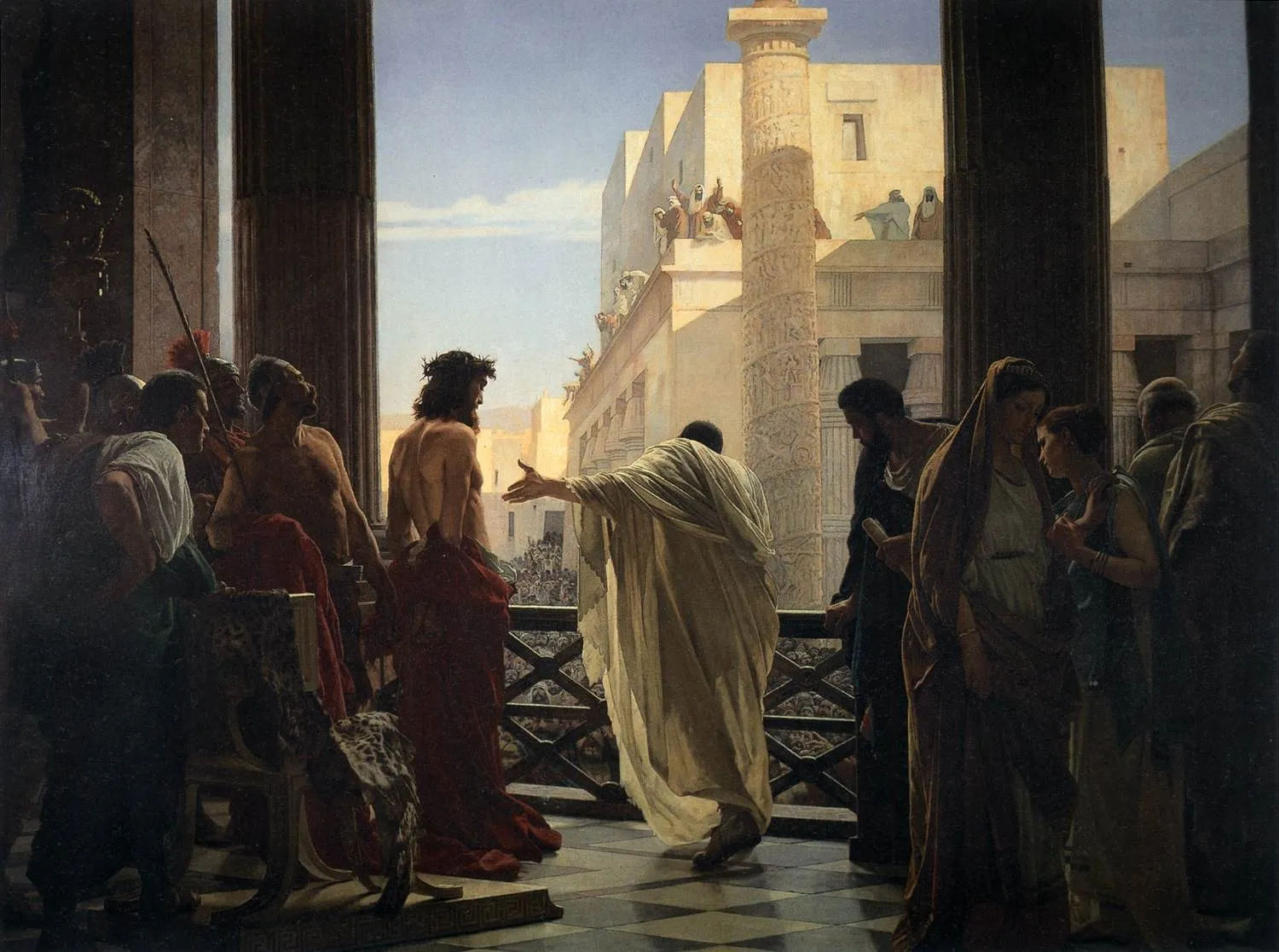
In AD 30, Pilate asked a man who claimed to be The God of the universe and claimed to be witnessing to The Truth – “Quid est veritas?” – “What is truth?”. It was a rhetorical question. But if it wasn’t, I wonder what the answer Pilate would have received…
Journey with me as I explore in future posts the idea of God & faith to discover if there is any way that we can know what Truth really is.